For me solar and electric cars have always been mainly about independence. Independence from big government, corporations, and foreign wars.
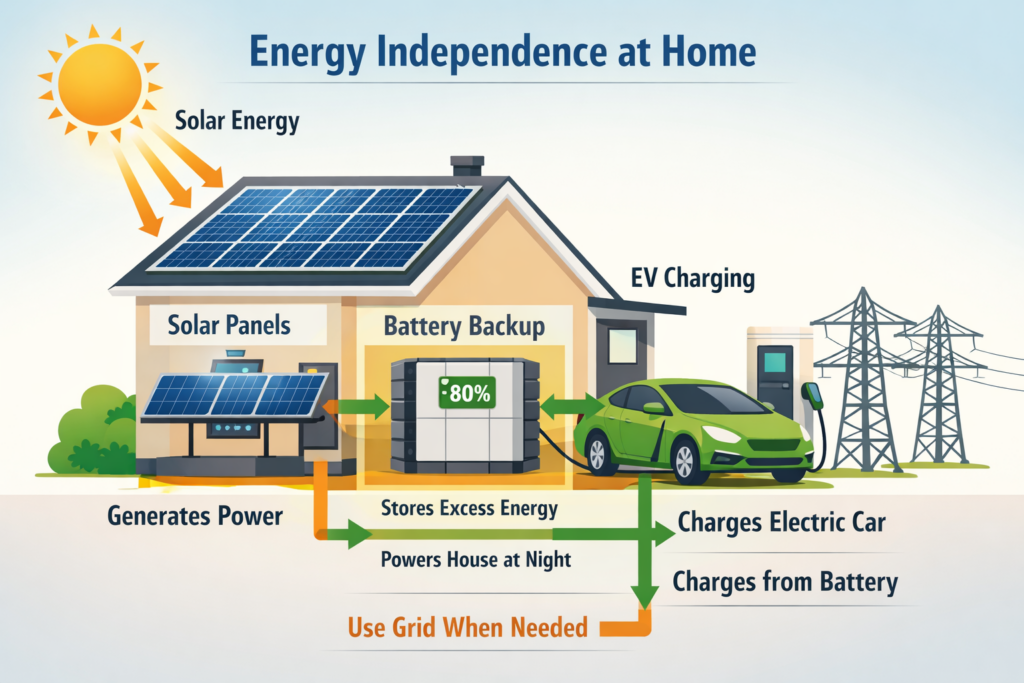
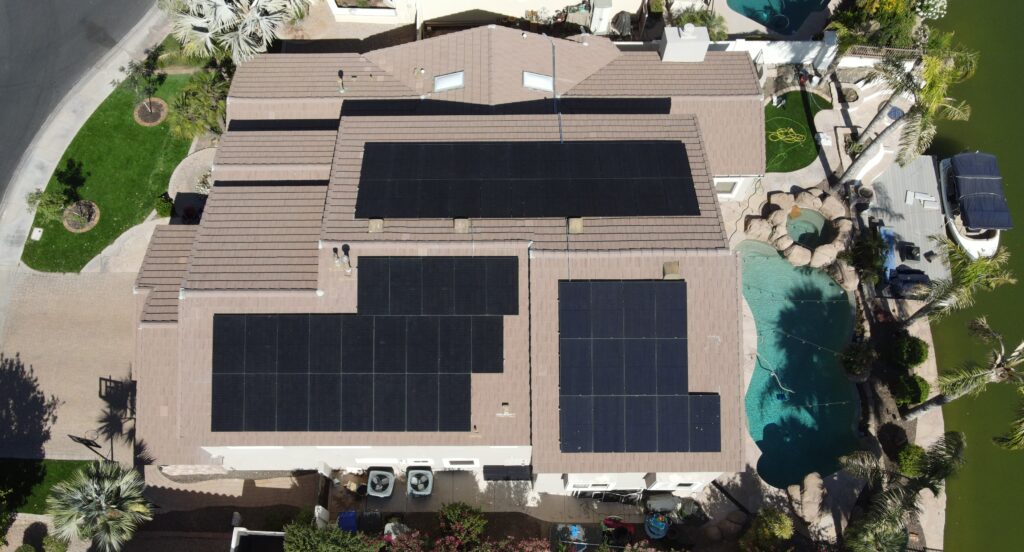
Over my entire adult life I have driven hybrids and electric vehicles, built my own battery systems, installed multiple solar panel systems, and experimented with SRP time-of-use pricing. I did this because I do not want my family’s transportation and home energy tied to foreign wars in the Middle East, oil markets, imported crude, or big corporate interests. Transportation is still where most petroleum gets burned in this country, and every mile I move from gasoline to electricity is one less mile dependent on this fragile system.
The problem with centralized systems.
In Arizona, you do not have a choice where you get your electricity from. You do not shop for your utility. You do not compare rates. You do not negotiate anything. You are stuck with a provider based on where you live, and then you live inside whatever structure they have built. And systems like this trap people into a broken system that does not benefit them.
What small government should mean.
This is where I think a lot of people misunderstand what “small government” should actually mean. If the goal is less dependence on large institutions, then energy is one of the clearest places to apply that thinking. A household that can produce some of its own power, store it, and decide when to use the grid is in a very different position than one that is fully dependent on it. And if that same household is driving on electricity instead of gasoline, it has also moved a major part of daily life out of the oil market. That does not mean disconnecting from the grid. It means you are no longer entirely at its mercy. To me, that is the more genuinely libertarian direction: less captivity, more optionality, and more control pushed back toward the homeowner. Petroleum still dominates transportation, while oil is only a tiny part of how electricity is generated in the United States. That is exactly why electrification matters.
Why this is becoming practical now.
For a long time, that idea was hard to implement in the real world. Solar was expensive. Batteries did not make sense for most people. EVs were niche. That has changed. The technology has matured enough that this is now something normal households can realistically do. The only real missing piece used to be storage. Solar during the day is easy. Nighttime is the problem. That gap is closing fast. Battery systems are improving, getting cheaper, and becoming realistic at the home level. I have built and tested enough of this to be confident it is not theoretical anymore.
Why global instability still matters here at home.
At the same time, the risks tied to centralized energy have not gone away. If anything, they have become more obvious. You do not have to look far. The situation involving Iran is a good example.

A significant amount of global oil still moves through a single chokepoint, and when that becomes unstable, prices react immediately. That pressure does not stay contained to one region. It flows through markets, into inflation, and eventually into the cost of living here at home.
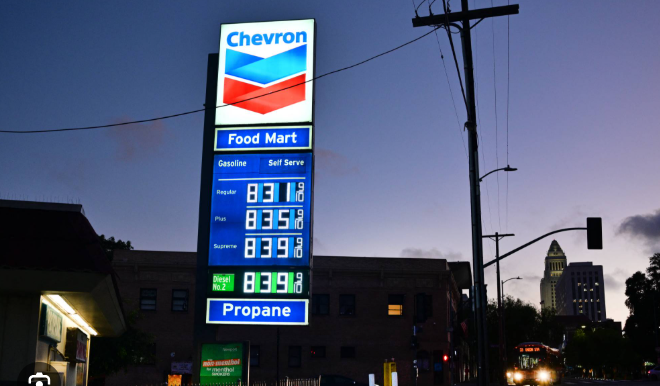
But this is exactly why I care so much about EVs, solar, and batteries. Transportation is still overwhelmingly tied to petroleum in the United States. Electricity is not. EIA says petroleum products made up about 89% of U.S. transportation energy use in 2023, while petroleum supplied only about 0.6% of U.S. electricity generation in 2024. So when I move my family from gasoline to electricity, I am not just changing fuels. I am reducing our exposure to the global oil market itself. And when that electricity can come from my own roof or from stored power in my garage, I reduce that exposure even more. That is what decentralized energy means in practical terms. It means foreign oil shocks matter less to your household than they otherwise would.
Why the SRP election matters.
Which brings this back to SRP. SRP is different from APS in one very important respect: SRP is a political subdivision of Arizona, its prices are not regulated by the Arizona Corporation Commission, and SRP’s publicly elected Board of Directors has the authority to establish electric prices. Ballots for this election are mailed March 11, the final day to request one is March 27, and election day is April 7.
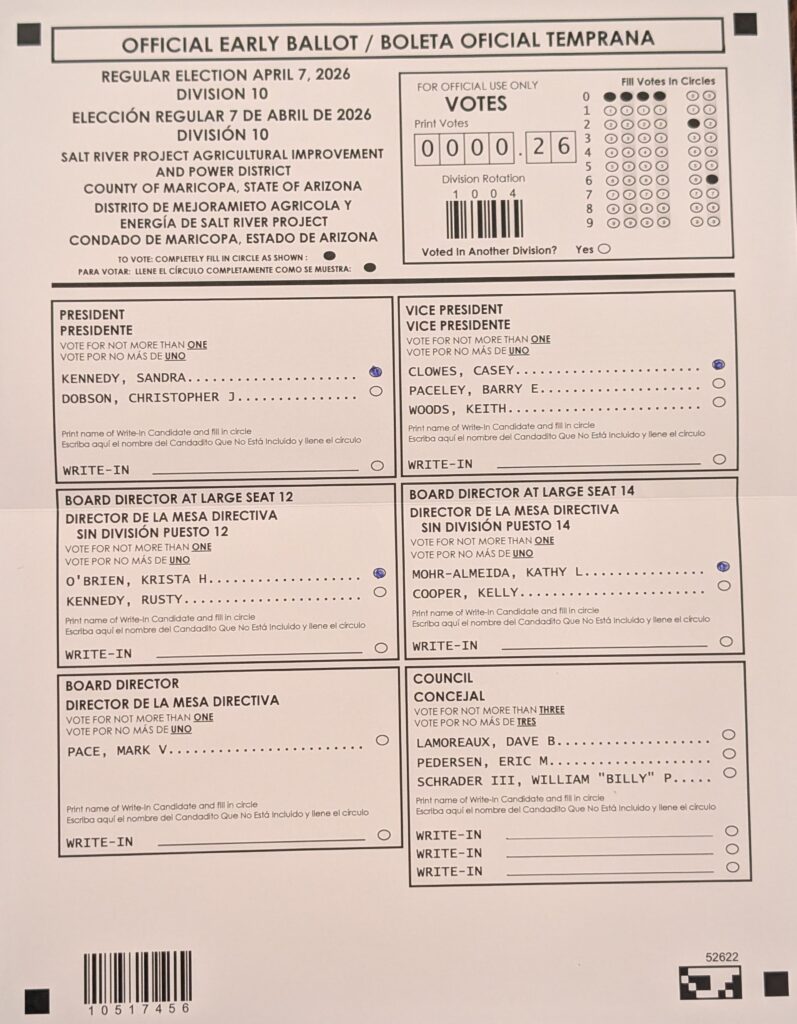
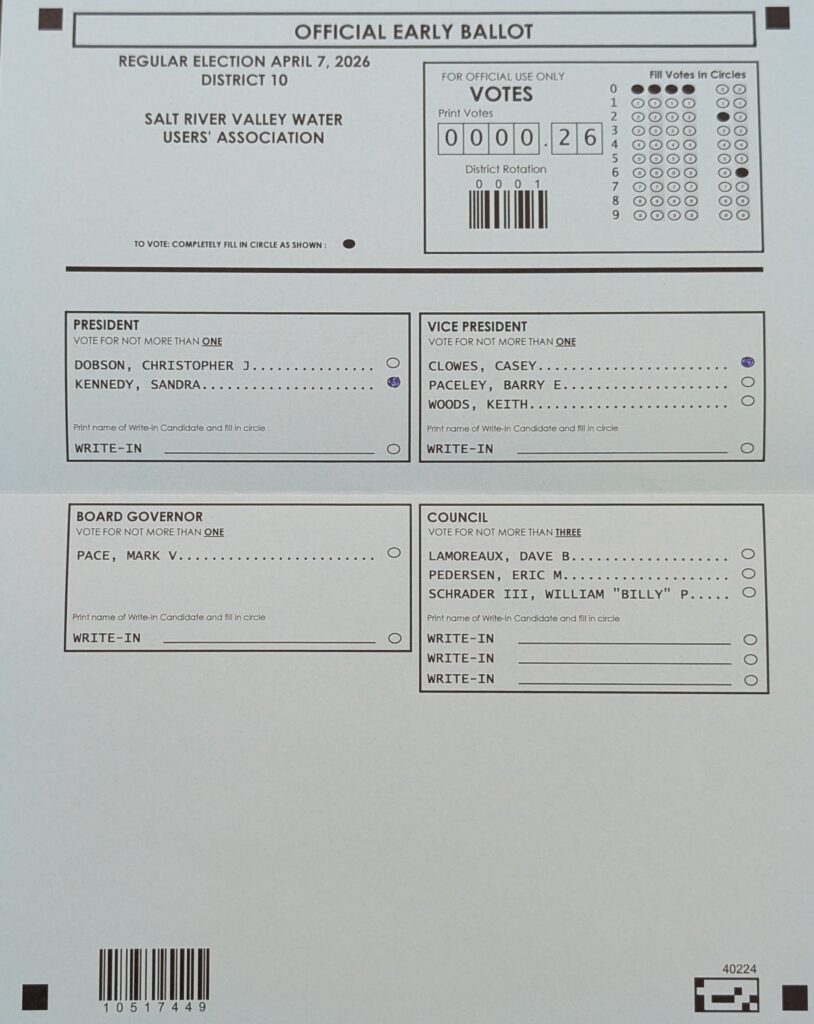
This is not a ceremonial race. It directly affects pricing and policy for the system. Because if Arizona is going to move more transportation off gasoline and onto electricity, then the rules governing rooftop solar, storage, and home charging matter a great deal — and SRP’s board has direct influence over those rules.
The direction of the race.
There are two clear slates in this election. The SRP Clean Energy Team is running on affordability, distributed energy, water protection, and making data centers pay their fair share. The opposing slate is the one drawing support from the political and business establishment. Turning Point Action has made its backing explicit, and because it is a 501(c)(4), the public generally does not get a normal public-facing donor list through IRS disclosure. Alongside it is Arizonans for Responsible Growth, a business-aligned PAC backing the same slate and openly supported by large-dollar contributors in the public record, including corporate and construction interests. Voters do not need to assume a conspiracy to notice the obvious: organized money and organized power are flooding this election with money.
Why 2029 matters more than most people realize.
The real fight over rooftop solar in SRP territory is not some abstract policy debate. It has a date on it: November 2029. That is when SRP’s remaining net-metering plans disappear. SRP’s own ratebook says the E-27 Customer Generation plan and the E-15 Average Demand plan will be eliminated in the November 2029 billing cycle, and customers still on those plans will be moved onto newer structures like E-16. That matters because SRP’s own comparison page shows E-27 and E-15 are the plans that still offer net metering. After 2029, that feature is effectively gone.
What replaces it is the real story.
The replacement model is not net metering. It is export-rate pricing. Under SRP’s export-based plans, what you take from the grid and what you send back are tracked separately, and exported solar is credited at just 3.45 cents per kWh. At the same time, SRP has shifted its newer rate plans so that 8 a.m. to 3 p.m. — the exact window when rooftop solar produces best — is the cheap part of the day, while evening hours remain the expensive period. SRP says this reflects abundant low-cost utility-scale solar on its system. The practical result is obvious: homeowners are pushed to sell their daytime solar cheaply and buy power back later at much higher rates.
Why that can cripple rooftop solar economics.
Rooftop solar works best for ordinary families when daytime production meaningfully offsets what they would otherwise pay the utility. SRP is moving away from that model. The only plans it still identifies as net-metering plans are going away in 2029, and the replacement structures value exported power far less generously. Outside solar advocates say SRP’s policies already discourage solar adoption, and even local installers are warning that the new structure is a direct hit to the economics of residential solar. So no, SRP is not outlawing rooftop solar. But by eliminating net metering and replacing it with low export credits and evening-heavy peak pricing, it is setting up a rate design that can make rooftop solar far less attractive for average homeowners.
Why that should concern even non-solar households.
Some people will hear that and think this is only a rooftop-solar complaint. It is not. The larger question is who the system is being designed around. The next phase of demand growth in Arizona is being driven by large, constant loads, especially data centers. SRP says data centers contributed 5.1% of its summer 2025 peak demand record and are projected to be its fastest-growing customer segment. That means cost allocation, grid planning, and price design are only going to get more important from here. If the board is not careful, ordinary households can end up carrying more of the burden while large new loads reshape the system around themselves.
Why organized money is showing up.
That is also why you are seeing organized campaigns, endorsements, and political energy around an election most people barely know exists. That does not happen by accident. When outside effort shows up in a low-visibility race, it usually means the stakes are higher than people think. The prudent response is not to shrug. It is to ask what direction these people are trying to lock in before the public notices.
My votes in the SRP-wide races.
For me, the question comes down to direction. Do we keep reinforcing a system where everything stays centralized and the individual remains fully dependent? Or do we start moving toward something more balanced, where households have more flexibility, more transparency, and more ability to manage their own energy? For that reason, in the SRP-wide races, I am voting for the Clean Energy Team: Sandra Kennedy, Casey Clowes, Krista O’Brien, and Kathy Mohr-Almeida.
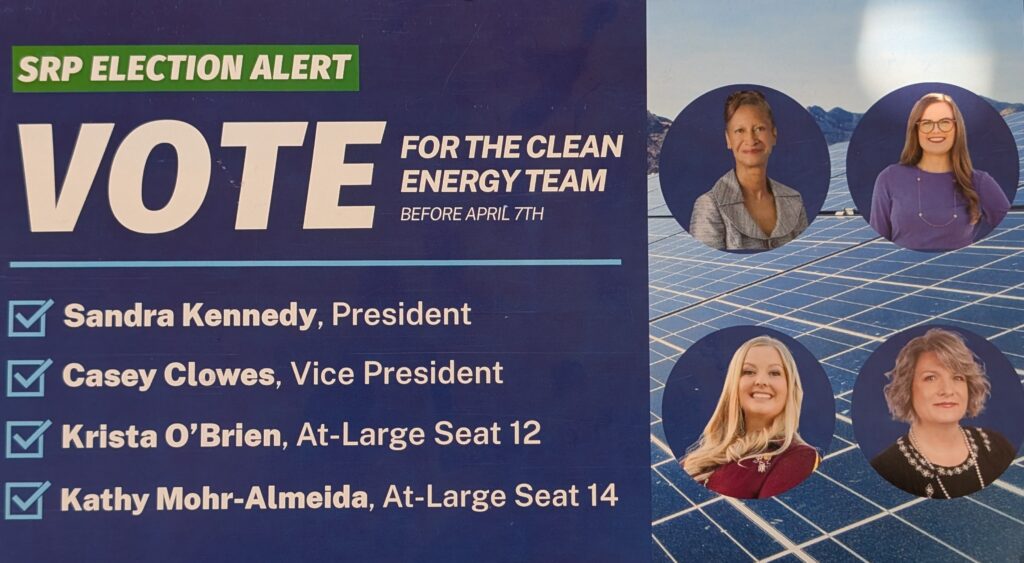
Their site frames the race around affordability, renewable energy, water protection, and making data centers pay their fair share. Between the two directions available, they are plainly closer to the one that gives more leverage back to the individual instead of concentrating it further.
The future that is already visible.
The future of energy in Arizona is already visible if you step back far enough. Solar on the roof. Storage in the garage. An EV in the driveway. A grid that still exists, but is no longer the only option. Not independence in the absolute sense. But less dependence. More control. And just as important, less exposure to gasoline prices, imported oil, and foreign instability. If transportation still runs mainly on petroleum, then moving transportation onto electricity is one of the clearest ways to weaken that hold over time. That is a better system. And we are close enough now that it is worth paying attention to which direction we push it.

















Leave a Reply
You must be logged in to post a comment.